
Cleaning and Disinfecting Leather Trays in Hotels Without Ruining Them
Key card, bill and amenity trays are handled by many people and need wiping often, but leather does not like water. Here is CDC guidance on cleaning versus disinfecting, and how to pick materials that can take it.
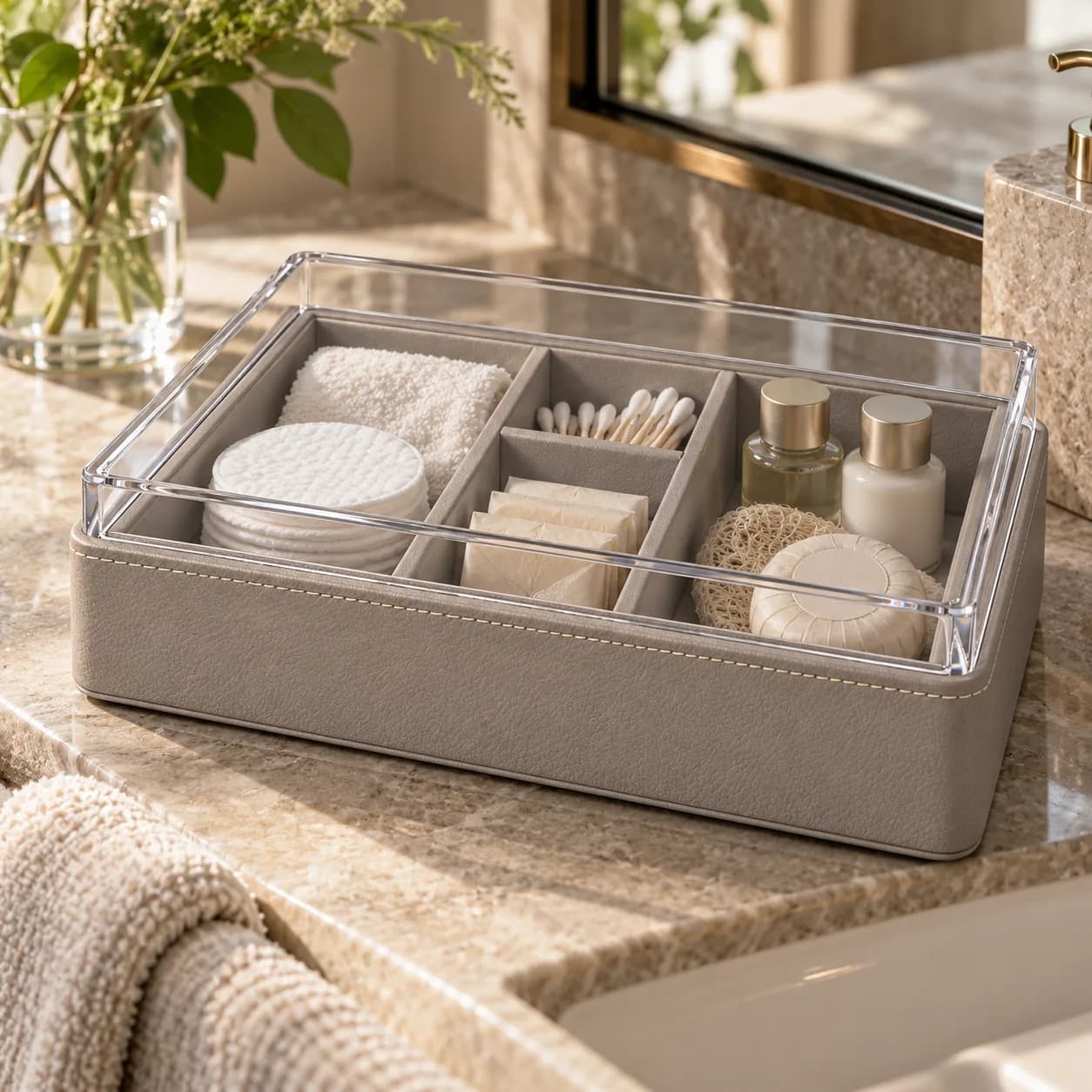
Cleaning, sanitising and disinfecting are different steps
The US Centers for Disease Control and Prevention (CDC) separates three steps. Cleaning with soap or detergent reduces germs on a surface and removes most of them. Sanitising reduces the germs left after cleaning. Disinfecting kills the germs that remain after that.
The CDC advises always cleaning first, because dirt stops disinfectants working properly. Clean high-touch surfaces regularly, and disinfect as well where someone has clearly been ill.
The catch: disinfectants must stay wet
The step people skip: the CDC says the surface has to stay wet for the whole contact time on the product label for germs to be killed, which can be several minutes. It also warns against mixing products, which can be hazardous.
Meanwhile the Canadian Conservation Institute notes that most leathers are damaged by direct contact with water. A hide leather tray left wet with disinfectant every day will stain, stiffen and lose its finish quickly. That is why the material for trays in high-disinfection spots should be decided when you order, not after.
Match the material to how often it is wiped
High-touch trays that need disinfecting daily, like key card trays at reception, bill trays and bathroom trays, should be upholstery-grade PU: a continuous plastic surface that liquid cannot soak into. For genuinely wet areas, choose a tray with no inner seams so disinfectant has nowhere to sit.
Low-touch, personal pieces such as a valet tray in a suite or a welcome gift tray can be genuine leather, since a dry or barely damp wipe is enough.
A routine for PU trays
Empty the tray. Wipe with a cloth dampened in a mild detergent solution and wrung out, then wipe again with plain water. If you need to disinfect, use a product whose label says it is suitable for plastic or synthetic surfaces, leave it for the labelled contact time, then dry.
Always test a new product underneath or in a hidden corner first. Some formulations turn a matte finish glossy or fade the colour, and it varies from brand to brand.
Caring for genuine leather trays
Dust with a soft dry cloth. For marks use a cloth that is barely damp, then let it air-dry in the shade, away from sun or hot air. The Canadian Conservation Institute does not recommend leather dressings for objects that are not flexed, because oils oxidise, stiffen and darken leather over time and leave a sticky surface that attracts dust. A tray is exactly that kind of object, so it does not need conditioning.
Watch for mould in very humid rooms: the same institute notes that relative humidity above 65% favours mould growth on leather.
References
Centers for Disease Control and Prevention. When and How to Clean and Disinfect a Facility.
Canadian Conservation Institute. Caring for leather, skin and fur. Government of Canada.