
Jewellery Tray Linings: What to Choose So Silver Does Not Tarnish
Silver tarnishes because of sulphur gases, and some common jewellery box linings give them off. Here is what museum conservators advise avoiding, and how to line a tray for rings, earrings and bracelets.
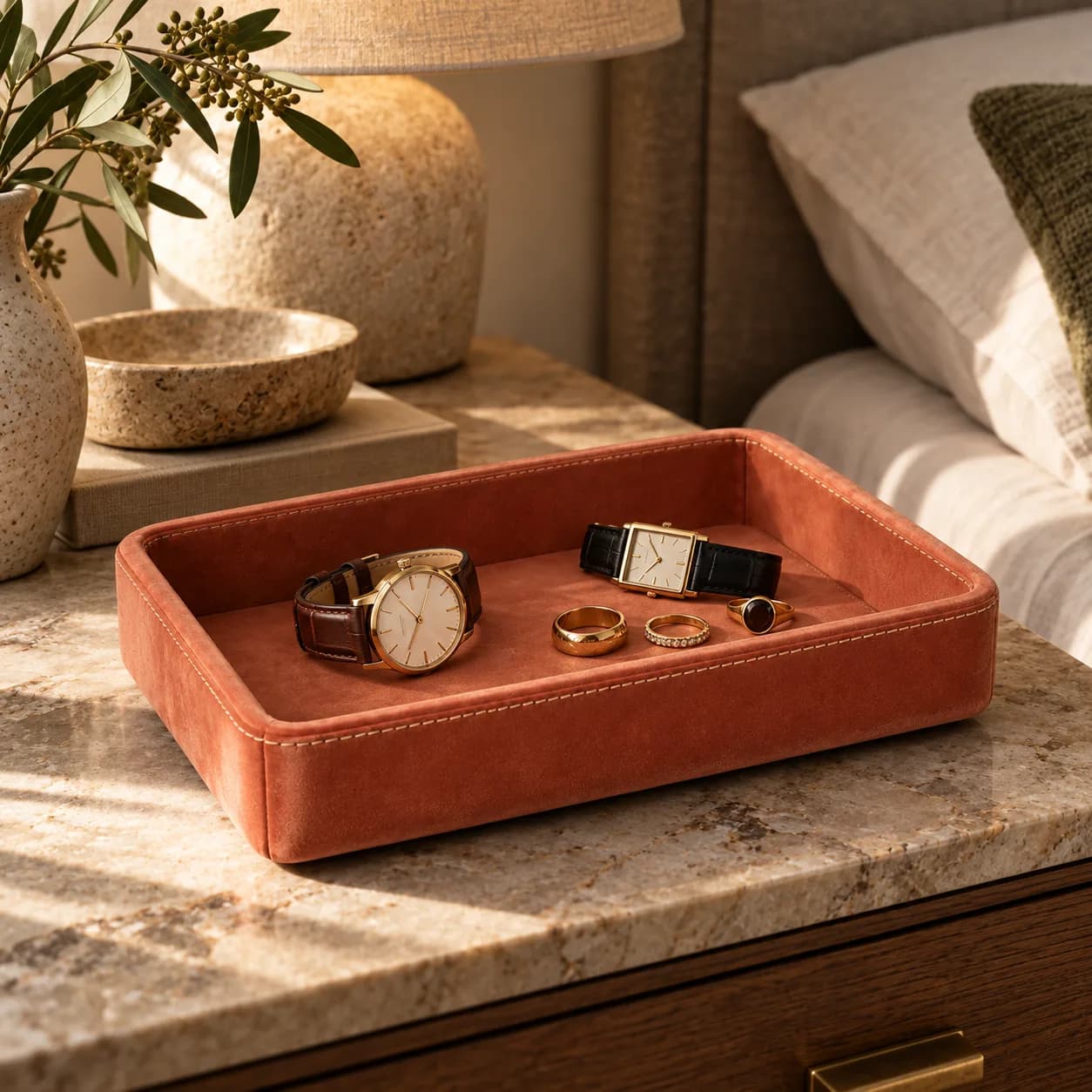
Why silver goes black
The Canadian Conservation Institute explains that the black film on silver comes from sulphur-containing gases such as hydrogen sulphide. Those gases come from the air, from some foods and, less obviously, from the materials sitting right next to the silver.
The institute names natural and synthetic rubber, certain paints and some textiles, giving wool and felt as examples. Both were standard linings in older jewellery boxes.
Rubber feet and felt: are they a problem?
Many of our trays have non-slip rubber feet, and some are lined with felt. For a valet tray or a serving tray that does not matter at all. For a tray that will store silver for long periods, keep rubber away from the silver compartments and skip wool felt.
The institute is careful to add that damage from wool inside enclosures has not been clearly demonstrated, and that the concern grows with large areas of wool. That is no reason to throw out an old box, but if you are ordering a new tray anyway, choosing the safer lining costs nothing.
What to line it with
For silver we recommend a short-pile velvet made from synthetic fibre. The short pile stops small studs from sinking out of sight, and the soft surface protects against scratches. If you are ordering custom trays, tell us they will hold silver and we will choose the lining and the placement of any rubber accordingly.
Gold does not tarnish the way silver does, but pieces still scratch when they rub together, so velvet and separate compartments matter for gold too. More on the material on our velvet page.
Compartments by type of piece
Rings sit best in padded slots set side by side. Earrings want small paired compartments. Necklaces need a long channel so they can lie flat instead of coiling over each other and tangling, and bracelets need a wide bay with a high enough wall.
On a crowded dressing table, a tray with a lid helps twice: it keeps dust off, and closed containers are what conservators recommend for silver anyway. See our velvet-lined jewellery tray or all designs under jewellery trays.
The same rules apply in a shop
Display trays in a shop sit open all day under lights and the stock turns over constantly, so tarnish is less of an issue than with long storage at home. If silver stays in the same tray overnight, though, the same rules apply. See jewellery display trays.
References
Canadian Conservation Institute. Storage of Metals (CCI Notes 9/2). Government of Canada.